
Broken Ankle - What I Need To Know

An ankle fracture, commonly called a broken ankle, can cause significant pain, swelling, bruising, and difficulty walking. However, not all ankle fractures require surgery. Some fractures are stable and heal successfully with a walking boot or cast, while others require surgery to restore the alignment and stability of the ankle joint.
Dr. Michael Sims is a board-certified orthopedic surgeon specializing in foot and ankle conditions, including ankle fractures. He evaluates each injury individually and develops a treatment plan based on the type of fracture, the stability of the ankle, the patient's activity level, and personal goals.
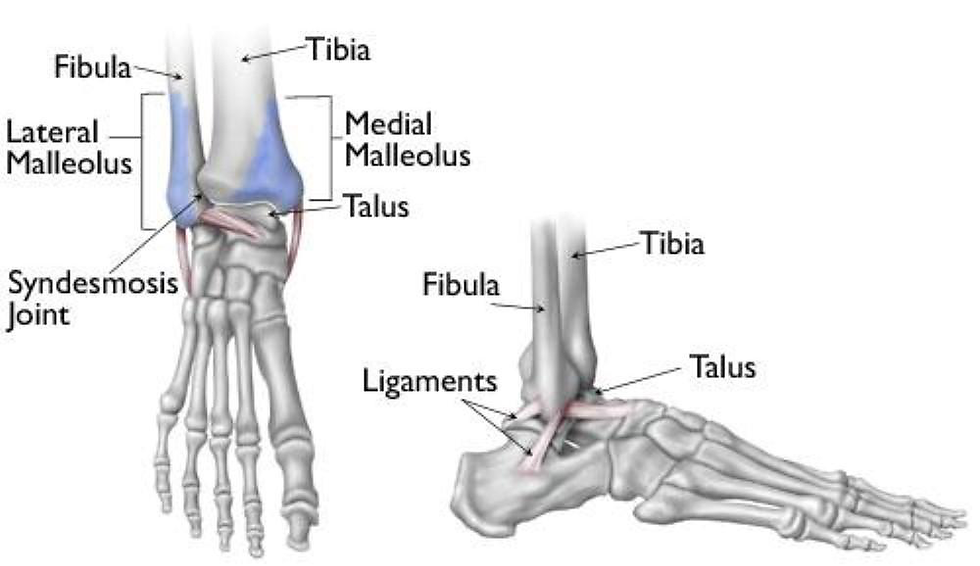
What Is an Ankle Fracture?
The ankle joint is formed by the tibia, fibula, and talus. The tibia is the larger shinbone, while the fibula is the smaller bone along the outside of the lower leg. The ends of these bones form the bony prominences on the inside and outside of the ankle.
An ankle fracture can occur when the ankle twists, rolls, or experiences a direct impact. Common causes include sports injuries, falls, and accidental twisting injuries.
Symptoms may include pain, swelling, bruising, tenderness, and difficulty putting weight on the foot. An examination and X-rays help determine the location of the fracture and whether the ankle joint remains stable.
Common Types of Ankle Fractures
1. Fibular Avulsion Fracture
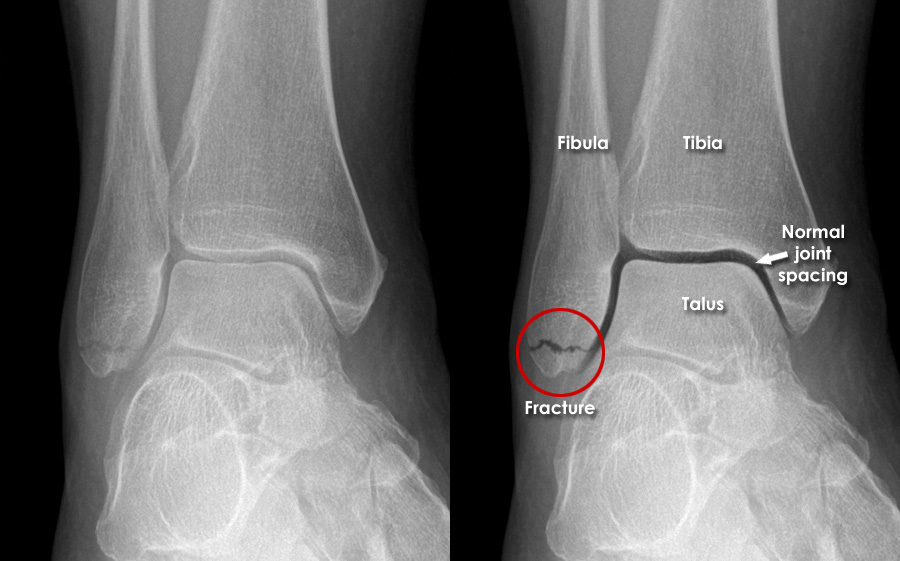
A fibular avulsion fracture occurs when a ligament attached to the fibula pulls off a small piece of bone. This often happens when a person rolls or twists the ankle, similar to the mechanism of a common ankle sprain.
These fractures are frequently small and stable. Many can be treated without surgery using a walking boot, ankle brace, activity modification, and gradual return to normal activity. The treatment plan depends on the size and position of the bone fragment and whether other structures around the ankle have been injured.
2. Stable Lateral Malleolus Fracture vs Unstable Lateral Malleolus Fracture
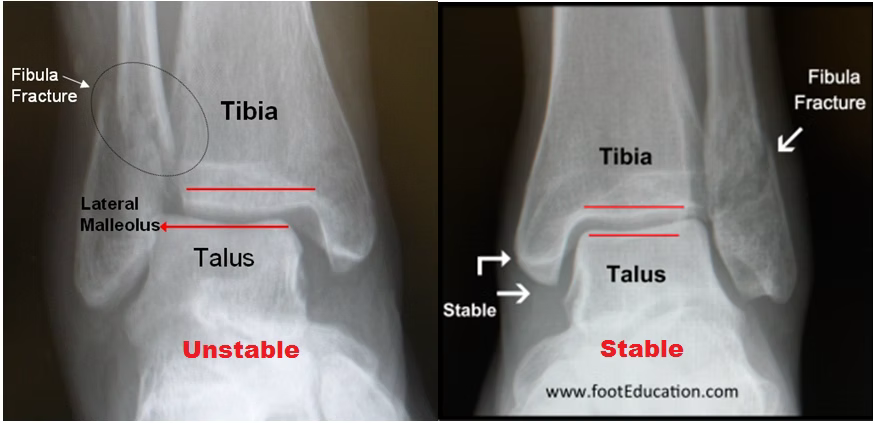
A lateral malleolus fracture involves the lower end of the fibula, forming the bony prominence on the outside of the ankle.
A stable lateral malleolus fracture means the broken bone and ankle joint remain in an appropriate position. The ankle's supporting ligaments are sufficiently intact to maintain stability. These fractures often heal without surgery. Treatment may include a walking boot or cast, appropriate weight-bearing restrictions, and follow-up X-rays to ensure the fracture remains aligned during healing.
An unstable lateral malleolus fracture occurs when the injury compromises the stability of the ankle joint. The fibula may be displaced, or associated ligament damage may allow the talus to shift out of its normal position. These fractures may require surgery to restore the proper alignment of the ankle. Surgical treatment commonly involves a plate and screws to hold the fibula in position while the bone heals. Importantly, the amount of displacement alone does not determine whether surgery is necessary. An orthopedic surgeon evaluates the overall fracture pattern, ligament integrity, and ankle alignment, sometimes using additional or weight-bearing X-rays.
3. Bimalleolar Ankle Fracture/Trimalleolar
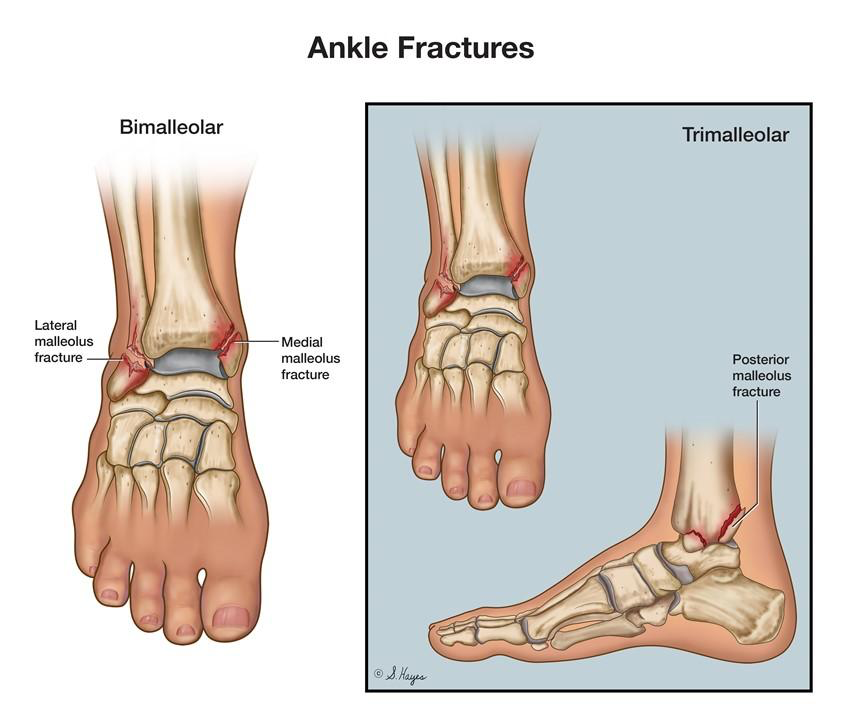
A bimalleolar fracture involves breaks on both sides of the ankle:
Lateral malleolus: The lower end of the fibula on the outside of the ankle.
Medial malleolus: The inner portion of the tibia on the inside of the ankle.
Because both sides of the ankle are injured, these fractures are often unstable and frequently require surgery. A surgeon may use plates and screws to restore the normal position of the bones and stabilize the joint.
Although surgery is common for bimalleolar fractures, treatment decisions still depend on the specific injury, the stability of the joint, the patient's overall health, and other individual considerations.
Does Every Broken Ankle Require Surgery?
No. Many ankle fractures can be treated successfully without surgery.
The most important factor is often whether the ankle joint is stable and the bones can remain in the correct position during healing.
Non-surgical treatment may involve:
A walking boot or cast.
Crutches and temporary weight-bearing restrictions when necessary.
Elevation and measures to manage swelling.
Follow-up appointments and X-rays.
Physical therapy to restore motion, strength, and balance when appropriate.
Surgery may be recommended when the fracture is unstable, the bones are significantly displaced, or the ankle joint is no longer properly aligned. Surgical fixation commonly uses plates and screws to restore the normal anatomy.
The goal of either approach is to allow the fracture to heal in a good position while preserving ankle function and reducing the risk of future problems.
Individualized Ankle Fracture Treatment With Dr. Sims
Dr. Sims understands that every broken ankle is different. Two patients with fractures that appear similar on an X-ray may require different treatments because of differences in ankle stability, bone quality, activity level, or personal circumstances.
As a board-certified orthopedic surgeon specializing in foot and ankle conditions, Dr. Sims evaluates each patient's injury and discusses the treatment options available.
His recommendations take into account:
The location and severity of the fracture.
Whether the ankle joint is stable.
The degree of displacement and any associated ligament injuries.
The condition of the surrounding skin and soft tissues.
The patient's age, overall health, and activity level.
The patient's preferences and goals for returning to work, exercise, and sports.
Some patients may be best treated with a walking boot and careful monitoring. Others may benefit from surgical repair to restore ankle alignment and stability.
Dr. Sims works with each patient to determine the most appropriate treatment for their particular fracture and individual goals. The objective is to promote proper healing and help patients return to their desired activities as safely as possible.
Ankle Fracture Recovery
Recovery depends on the type of fracture and whether surgery is needed. Many ankle fractures require approximately six weeks or longer for initial bone healing, while more complex injuries may require several months of rehabilitation.
Patients should follow their prescribed weight-bearing restrictions and attend follow-up appointments to ensure the fracture is healing properly. Once healing allows, rehabilitation can help restore ankle movement, strength, balance, and walking ability.
Schedule an Ankle Fracture Evaluation
If you have a broken ankle, determining whether the fracture is stable is an important first step toward choosing the right treatment.
Dr. Michael Sims is a board-certified orthopedic surgeon specializing in foot and ankle conditions, including stable and unstable ankle fractures. He practices in Greenville, South Carolina (Upstate South Carolina) He provides individualized care designed around the specific injury and each patient's needs and desires.


Comments